by Naresh Jotwani
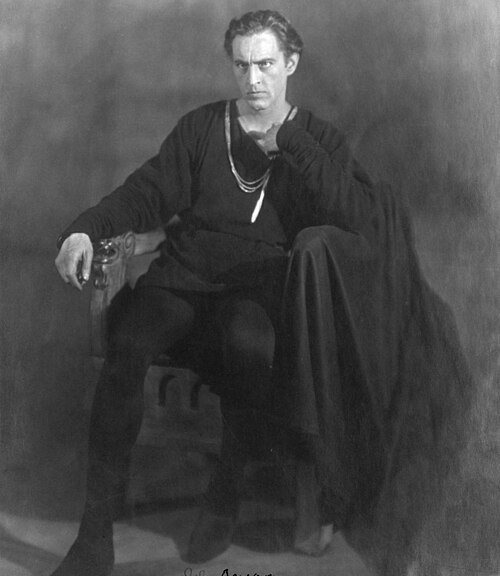
The following lines from Shakespeare’s Hamlet constitute the most famous soliloquy in English literature:
To be, or not to be, that is the question:
Whether ’tis nobler in the mind to suffer
The slings and arrows of outrageous fortune,
Or to take arms against a sea of troubles
And by opposing end them.
However, these charming and moving lines — and even their fame — tend to keep one from making an objective analysis of Hamlet’s dire predicament. One thereby loses sight of several options which Hamlet could have considered, other than the two which he articulated. The following three options should be fairly obvious to any sane person acquainted with ‘the slings and arrows of outrageous fortune’. As they say, this is not exactly ‘Rocket Science’:
(1) Hamlet could make a tactical retreat and live to fight his uncle another day. Did nobody teach him that ‘Discretion is the better part of valour’?
(2) Hamlet could make a false show of loyalty to his uncle and his mother/aunt. After skillfully gaining their trust, he could execute a well-timed and well-placed stab in the back. Surely such acts must be pretty common within the thick and thin of any palace intrigue.
(3) Hamlet could sneak out of Denmark, along with Horatio and a faithful band of soldiers, and find a colony somewhere else to take over and exploit.
Clearly Hamlet’s soliloquy is not an example of objective SWOT analysis. He was not by nature a person who would do that; nor was he in a condition to be logical and objective. Would there ever be a human story if men and women did not engage in highly emotional, subjective behaviour? If everybody behaved like a chess master, life would be very dull indeed.
Presumably, for an emotionally moving, successful play – a ‘hit’ which would pack the crowds in every night — Shakespeare had to deprive Hamlet of the more rational options. He had to leave Hamlet with only the two extreme, stark choices about which the prince cried out with great anguish.
[Even in those early days, eyeballs would have counted for much! Did Shakespeare not have bills to pay?😉]
Can one compare Hamlet’s extremely difficult situation with that faced by a real prince, Siddharth Gautam, a couple of millennia earlier?
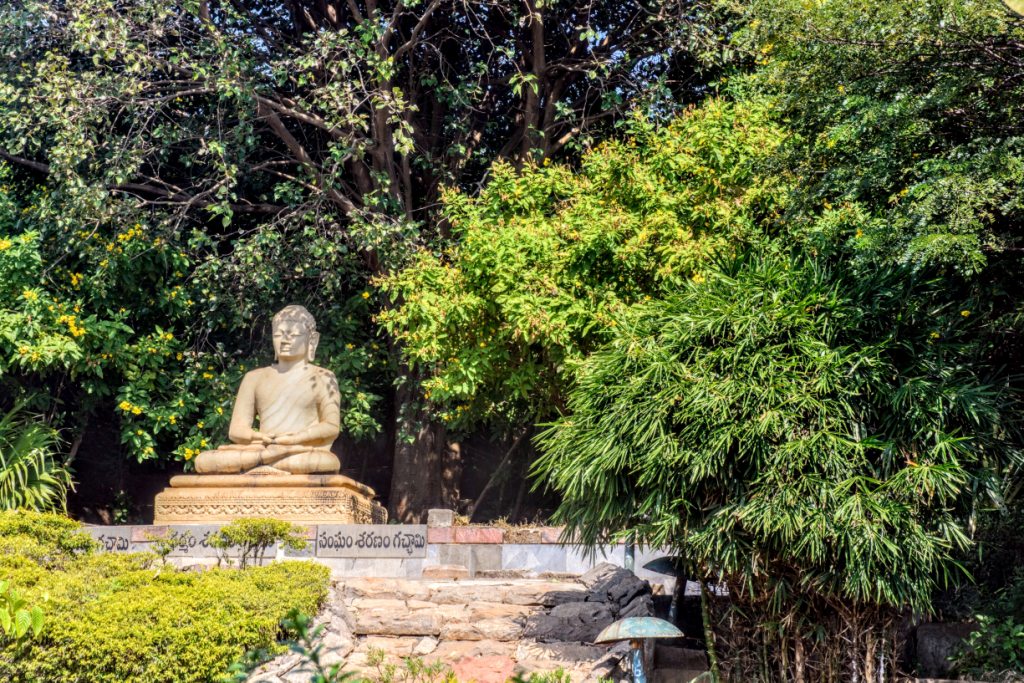
Surely Siddharth would have witnessed palace intrigue in his first twenty nine years; he could not possibly have been shielded from it for that long. Outside the palace grounds, he witnessed sickness, old age, death — and an example of willing, peaceful renunciation of worldly life.
Possibly, upon glimpsing the peaceful renunciate, Siddharth felt that there existed a way to attain freedom from suffering. He then set out on his resolute search to discover for himself the path to attain that freedom. He might not have known how extremely arduous his journey would be — but he reached his destination and shared his findings freely with people.
Question: Why is ‘renunciation’ not among the rational options listed above, as being available to Hamlet?
Answer: Unlike the other ‘worldly’ options listed, renunciation was not in the culture of that time and place. That thought would not exist then in an average Dane’s mind – and quite possibly not even in Shakespeare’s mind. Every culture lives within the bubble of its own collective consciousness; what lies outside that bubble is non-existent for those inside.
The belief that there may be a noble, non-violent way to attain freedom from suffering was absent from the culture in question. Giving Hamlet that option would have turned the play into a flop show. Crowds would have booed on the first night, and stayed away thereafter. ‘Real men’ do not renounce – although thoughts of suicide were evidently acceptable!
The culture offered examples of unending of indulgence and violence, not of renunciation and peace. That the play is based on an old myth implies that the culture long lacked that concept. Historic stories — such as those associated with Henry VIII, for example — further reinforce that belief. One cannot imagine ‘Hagar the Horrible’ types being much inclined to reflection and the search for truth.
Shakespeare created sublime magic with his language. He was a highly skilled playwright; but he was not — and did not need to be — a philosopher with a clear, holistic view of the rational options open to his lead character. That holistic view is irrelevant to the playwright’s objective.
The culture of that country at that time and place lacked seeding with the idea of renunciation in the search for truth. The prevailing norms were quite likely ‘Kill or be killed’ and ‘Every man for himself and Devil takes the hindmost’. Indeed, signs of that culture are still visible today in the so-called ‘west’ – the only difference being that people wear different clothes and speak a different variant of the language.
[Tragically, suicides still happen. Among the ‘ruling elites’, however, there has lately been a clever innovation. People who are inconvenient to the ‘ruling elites’ somehow end up getting ‘suicided’! That’s progress, isn’t it? ]
Why should dastardly ‘worldly acts’ – such as what Hamlet’s uncle and mother did – NOT be called out and renounced? Do such acts create happiness? Peace? Fulfillment? Do they build healthier societies?
Why should dastardly acts not be assessed by their outcomes? Should one not judge a pudding by its taste? What happens if the pudding is bitter and smelly? Of course the chef has to answer. There is no room for ‘political correctness’ here.
Blaise Pascal wrote, ‘Let us endeavour to think clearly, for that is the basis of morality’. Renunciation is the rational first step towards attaining clarity. Clarity is what Siddharth Gautam attained at the end of his extremely arduous journey.
The idiom is different today. Someone might simply say: Hey, guys! Things are not working out too well. I need to get away from it all, to work things out by myself. That will be hard, I know, but no other option makes sense.
There is absolutely no need to use ‘profound’ but vague words such as ‘spirituality’, ‘religion’ or ‘higher calling’. The aim is simple: Clarity of mind — which broadens a person’s perspective beyond indulgence, revenge, violence or pessimism.
The sages of ancient India fully understood this point, as seen in this cryptic dictum in the Upanishads: तेन त्यक्तेन भुंजिथा। Rough paraphrase: Enjoy the fruits of life with gratitude, not with arrogant entitlement.
