
by Naresh Jotwani
POWER is a word much in use today: as in powerful, powerless, power-hungry, power line, power station, power electronics, power politics, purchasing power … and more. After a quick, broad look at this theme, this post will focus on the two main variants of power: HARD POWER and SOFT POWER.
Physics and engineering offer a simple and quantifiable definition of POWER: the rate of consumption or generation of energy. This is a useful concept in life, commonly through the units of watts, kilowatts, megawatts … et cetera.
POWER — in its common understanding — affects human lives in complex ways, because it is integral to how a society functions. For this post, the working definition is:
In human interactions, POWER refers to one person’s ability to command, coerce, persuade, cajole, punish, pay or seduce another person into a specific course of action.
A few examples:
- Who commands? Army or police officer, sports coach.
- Who coerces? Bully, gangster.
- Who persuades? Manager, teacher, parent, friend.
- Who cajoles? Parent, spouse.
- Who punishes? Judge, parent.
- Who pays? Moneyed person.
- Who seduces? Cunning mistress (based on hearsay!😉).
The intention behind the use of power may be benevolent or otherwise. This is an important distinction; the first is essential for the smooth running of society, whereas the second is harmful. A father who disciplines his young son in a measured way has the right intention, but a father who takes out his pent up frustrations on his son is doing harm.
A clear distinction can be made between two categories of power: (a) hard power, which relies on physical means, and (b) soft power, which appeals to the heart and mind.
Armed forces, domestic law enforcement, security guards, prisons, bar bouncers et cetera are examples of hard power. Given the reality of human nature, hard power is a necessity for the functioning of society. Like it or not, one has to accept that fact; otherwise, one is inhabiting LA LA land, ingesting prohibited substances, or both.
So much for the general concept of power in human interactions. The question now is: What exactly is soft power, and why is it even needed?
Life under constant application of hard power is dreary, unbearable and unsustainable. To see the truth of this assertion, one needs to note only that a family without love is no family, and will surely break up one day.
The family, the community and the society need a regular supply of nurture, love, care, art, education, critical thinking, good faith dialogue, mutual help … et cetera.
Hard power expects uncritical obedience, which is sometimes necessary – in difficult situations, for example. However, uncritical obedience to hard power as the only form of human interaction, to the exclusion of all other human qualities, is a historically proven recipe for disaster.
With one exception, the examples below are taken from ‘western’ societies, because (a) better records are available, and (b) the leaders in question spoke their minds clearly, without any humility or diffidence.
Spare the rod and spoil the child is an English saying. Children were to be taught to rule over the empire’s domains. Naturally, hard power was the main instrument. The empire’s soft power came through excellent English literature, as also the pomp and splendour with which a toothless, showpiece monarchy was very cleverly smothered. At its peak, the empire was not a true democracy, since it lacked adult franchise.
The following is a statement of the nineteenth century Jewish British PM Benjamin Disraeli:
The objective of the British Empire is to gain and hold territories that possess the largest supplies of the basic raw materials. Establish naval bases around the world to control the sea and commerce lanes. Blockade and starve into submission any nation or group of nations that opposes this empire control program.
Please note the words ‘starve into submission’; that strategy did not work out too well in Ireland. The empire’s end came after the two hugely costly world wars and then the Suez crisis, in which US President Eisenhower played a decisive role.
Republican US President Eisenhower is a good example of a judicious combination of hard power and soft power. During WW II, he had served as US Army General. He won two US presidential elections decisively, and served as President from 1953 to 1961. Some of his policies were in fact continuations of Democrat FDR’s policies.
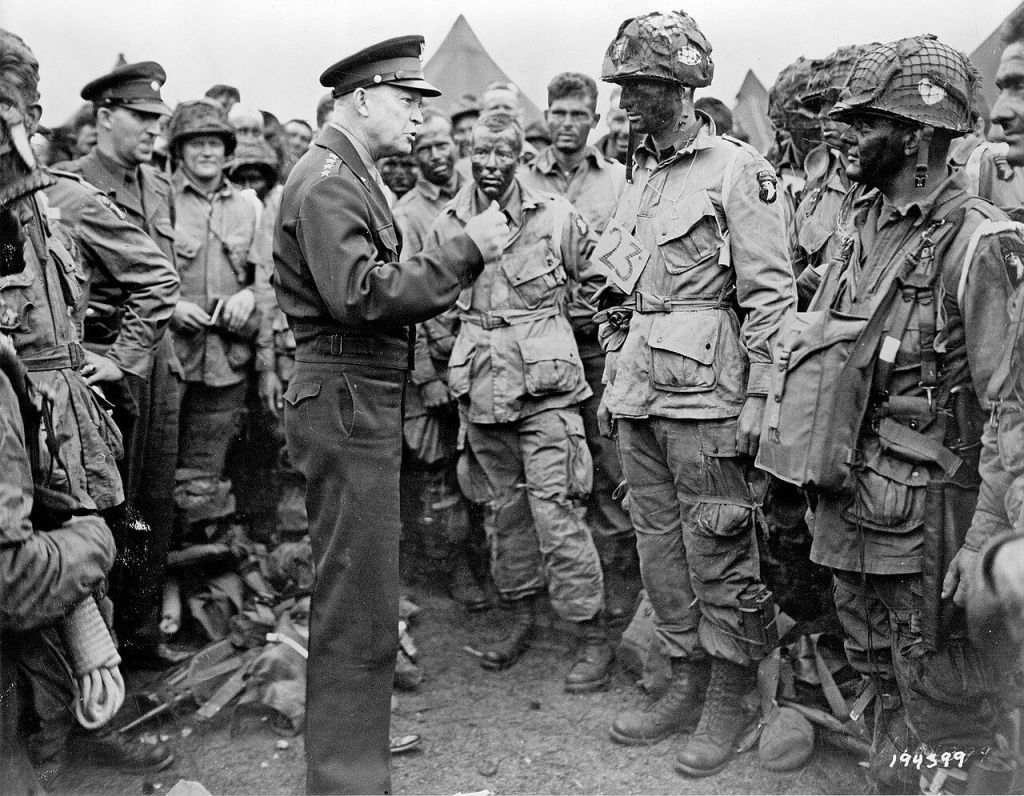
Wikipedia summarizes his record in the following words:
His two terms saw unprecedented economic prosperity except for a minor recession in 1958. In his farewell address, he expressed his concerns about the dangers of massive military spending, particularly deficit spending and government contracts to private military manufacturers, which he dubbed ‘the military–industrial complex’. Historical evaluations of his presidency place him among the upper tier of US presidents.
It is to be noted that, going on now for a few decades, ‘the military–industrial complex’ — joined at the hip by big finance and the megaphones (here) — has been the main driver of global conflicts.
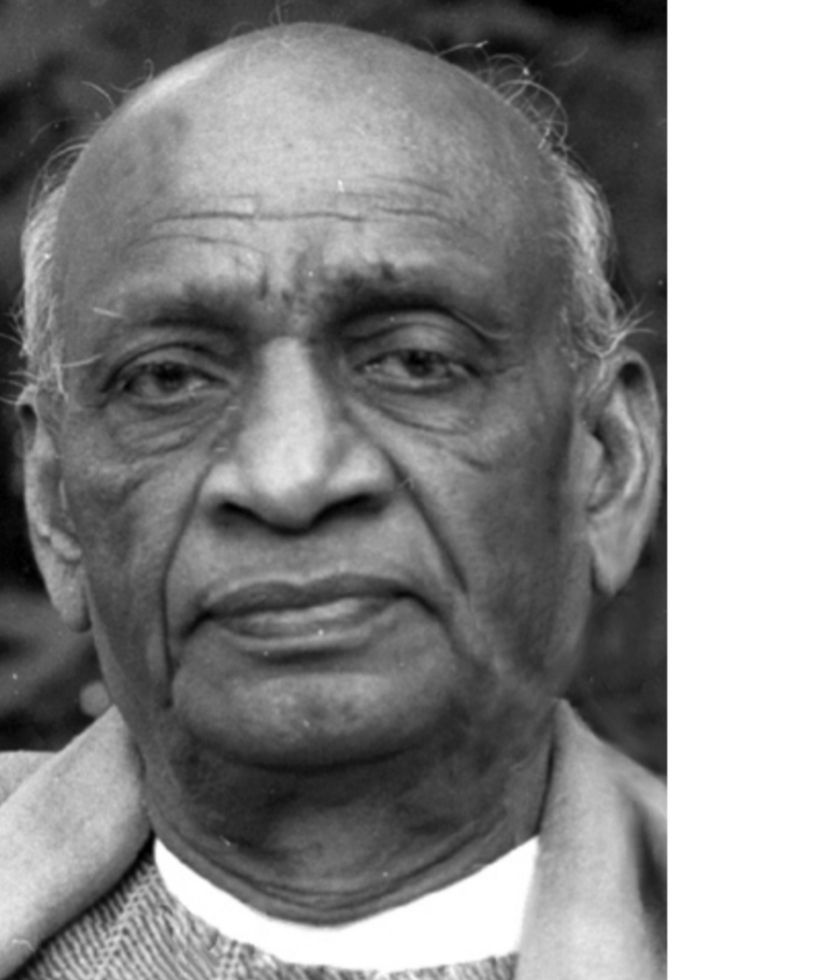
In recent Indian history, Sardar Patel exemplified an excellent harmony between hard power and soft power. Persuading a few hundred princely states to join the Indian Union would not have been be possible otherwise. In those days, some people in Gujarat likened his character to a coconut: hard on the outside, soft on the inside. There was not the slightest trace of double dealing or hypocrisy in how he dealt with people.
One may fairly conclude that, in the organization of societal affairs, only a judicious combination of hard power and soft power can bring about expected results.
The obvious question then is: What exactly is ‘judicious’?
Soft power aims to appeal to the heart and the mind. But soft power works only if that appeal itself is from the heart – not a cynical PR or political stunt. It is not difficult to find insincere and even malicious uses of soft power.
Compared to other forms of power, financial power is an extremely flexible instrument. It morphs quickly to the holder’s intentions — good or bad — and serves both hard power and soft power. In today’s electronic form, financial power provides to clever operators endless scope for deception and subversion. Several earlier posts on this blog have addressed this theme. The following is from Machinery of Global Finance.
Political power, PR & deception: Edward Bernays, known as ‘the father of PR’, was Freud’s nephew. In 1929, to increase tobacco company sales by getting women to smoke, he organized a Torches of Freedom march in New York. Marching women demanded the right to smoke, as a sign of their equality with men. Bernays described masses as ‘irrational and subject to herd instinct’, and outlined how ‘skilled practitioners could use crowd psychology and psychoanalysis to control them in desired ways’.
US Presidents Bill Clinton and Barack Obama used both hard power and soft power. Their use of hard power had limited success, if any, and even their best friends would not claim that their soft power initiatives came from the heart. Clever PR and political calculations were the main ingredients and drivers of their soft power initiatives.
President Lyndon B. Johnson (LBJ) provides a very interesting and contrasting example.
During the Vietnam war years, one of LBJ’s famous sayings was: If you’ve got them by the b***s, their hearts and minds will follow. One assumes that it was a clever way to say that ruthless application of hard power to North Vietnam would obviate the need for soft power.
Then what happened? Young people revolted in the US. LBJ chose not to run for re-election. His successor Nixon had to sign a peace deal. Karma later had LBJ himself by the b***s. He died lonely and miserable on his Texas ranch – all power gone, reputation shattered, under depression. He was not a dictator, but an extremely cynical and ruthless manipulator of the machinery of power, whose name is linked closely with several outright crimes and the infamous USS Liberty incident.
Two examples from Hollywood may clarify the point. Old time star James Stewart projected a certain degree of decency and class — values which appealed to hundreds of millions. A quick comparison of his appeal with the appeal which John Travolta projects brings out the meaning of soft power.
Cunning operators like Bernays, working on the fringes of legality, are quick to spot openings in soft power and creep right in. Cynicism rots soft power from the inside, and financial scamsters quickly see their opening too. Epstein, who was quite active at Harvard, is a sickening recent example.
A dictator is drunk on his own political power. Unfortunately, likely through some childhood misfortune, he is clueless about soft power. He cannot — or will not — understand that common people are more concerned with family, nurture, community bonds and so on. Blindness to these vital aspects of life leads to misrule and eventually the dictator’s fall from power.
This is famous a saying attributed to Abraham Lincoln: God must love the common people, because he made so many of them.
This saying can be rephrased thus in terms of family bonds and nurture: The common people, holding on to their faith and family values through thick and thin, ensure the continuation of a society. An exclusive club of powerful, clever political and financial operators — the so-called ‘elite’ — do not by themselves constitute a complete, viable society.
This is a simple key to define soft power: values which can durably sustain happy family and community life. No PhD or MBA is required to understand this simple definition.

