
by JAYRAM DAYA, GUEST AUTHOR
Looking at matchbox cars in a shop window, I would be happy as a lark. I would stand in front of toy stores, claiming to want to buy one. I would think that everything there might one day be mine. As a young and growing boy, I lived in a dreamland dominated by toy cars. When the sales-lady questioned what I wanted, I would simply walk away and, while walking back home, keep thinking, ‘If only I had the money’.
Being young and innocent, and living in a dream world, was the happiest time of my life. It didn’t matter if I was told at the time that we were poor, and didn’t have enough money to buy those toys. I had no idea that daydreaming was free of charge. Only much later, when I was drawn to music, arts, crafts, and woodworking, did I realize that it is the foundation of human expression.
Ever since my elementary school days, children of the rich and famous have been a part of my life. I remember lunch breaks when many of my friends ate chocolate, sweets and snacks. Those who couldn’t afford the mouth-watering experiences, like me, were always the ones who wished they could.
These friends were afraid to share, so they avoided us during lunch breaks. I would sometimes barter my labour for a piece of chocolate, say by carrying their school bags home. It always worked. The children of the wealthy were sluggish and lethargic. They owned everything that money could buy. I was a mediocre student, a daydreamer, and a child with many fantasies.
This was my introduction to money during my school education.
School years also meant school vacations. A rich neighbour’s daughter used to visit our small town during the holidays. She was about my age, and I enjoyed her company. She came from a wealthy family and lived in a big city. While playing hide and seek, I used to admire her red lipstick, red painted nails and small heel shoes. Yes, she was stunning.
I sat with her occasionally to hear about fashion and the city’s delights. Much of it was like a fairy tale that stimulated my imagination. At that age, I realized beauty and pleasure were also linked to money. As we got older, we grew to like each other. We always wished to see each other and looked forward to school holidays. We talked about birds and bees. I would run around the fields catching butterflies to show my appreciation for her friendship.
She was wealthy and attractive. To win her friendship, I had to be the rough village boy with tattered clothes and a cheerful smile. Her parents did not approve of our friendship since they saw me as a labourer’s kid. Money has no bearing on love. Love does not ask whether a person is wealthy or not. My grades suffered since all I could think about was playing and fantasizing.
Despite their brief duration, those days made a lasting impression. As I approached adolescence, my desire to own money grew. Growing up in a family of six brothers and a sister was neither exciting nor rewarding. I had several siblings as well as some elders. It is always the case that one brother or sister is successful, and the other is neglected because of sibling rivalry. The elders were given priority in the distribution of household chores. As a willing participant, I was always given some work. Shining shoes, washing dishes, and helping mom with laundry became routine tasks. Due to their lack of literacy, my parents blamed both the wealthy and the poor for our many hardships.
In one of those dream worlds, once I asked myself, ‘Can I make money from nothing? Is it just me, or am I living in a dream world?’
Childhood was the time when fairies, magic, and miracles were real. It was only later that I realized that faith was an assurance of things wished for. One day I posed my doubts to my granny, who had worked as a farm labourer in her younger years. She was well-versed in vegetable gardening. She described a gruelling day’s work in the fields for the scant money she earned. Most of the work was done in the spring, when seedlings were planted in the rain. That sounded thrilling to me; but harvesting and weeding in the summer heat saps one’s energy and makes one want to sleep until the next morning.
I was taught that money and intelligence were linked, and that physical endurance needed to be developed. One point she always emphasized was honesty. She mentioned how other field workers stole vegetables and fruits from farms, and how she abstained because my grandfather was a man of principles and would never accept it.
I asked her one winter day, while sitting near the fireplace, if I could make money out of nothing. She answered positively with a ‘Yes’. My mom called just then, so I missed the conversation. That night as I slept, I reflected on her work in the fields and compared it to the nature studies we had done in school. At the next available opportunity, I asked her how to produce seeds. Her response was straightforward: ‘From rotten fruits and vegetables’. An innocent question followed, asking if one could make seeds from rotten tomatoes. ‘Yes’, Granny said right away.
Granny was a wise woman who taught values through simple folk tales. Knowledge leads to wisdom, and I had the privilege of having her as my mentor. The following one of granny’s many folk tales inspired me no end.
The drumstick tree
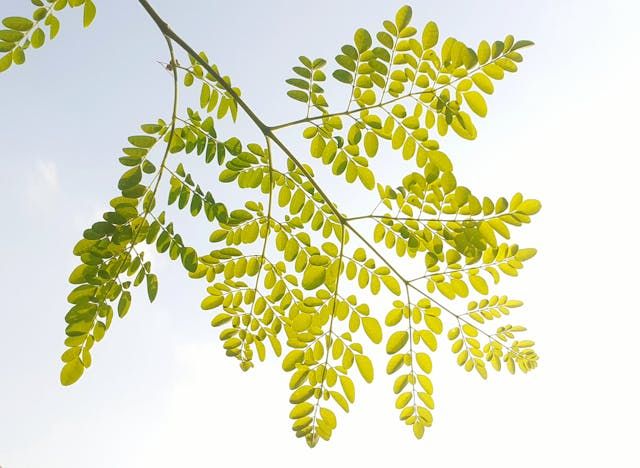
In a village tucked away in the fertile countryside of India, lived a successful farmer. He had two kids who could have been successful farmers given the property they owned, but who were sluggish, and spoilt by their mother. One day the boys’ maternal uncle – mother’s brother – dropped by for a visit. He understood the situation and warned his sister against spoiling the children and making them lethargic and lazy.
The farmer and his wife were elderly. Even their passing away did not affect the two boys’ lazy attitude. Both were married, but spent their days doing nothing, while their neglected land became overgrown with weeds. Their wealth was soon lost, but one drumstick tree, also known as moringa, provided a daily harvest of fresh drumsticks.
The uncle, concerned about the children’s well-being, decided to visit them. The evening meal was prepared. The elder brother sat with his uncle, saying he was observing a religious fast that day. The younger brother came along but declined the food, saying he was not hungry. When the uncle noticed that the food was only enough for one person, he realized that poverty was knocking on the door of this once-wealthy family.
He slept soundly at night but worried about his nephews. Early in the morning, he overheard the elder son talking in soft voice with a vegetable vendor. In full moonlight, and without making the slightest sound, he observed that the elder son exchanged drumsticks for money from the hawker lady.
The uncle realized at once that the drumstick tree was his nephews’ only reliable source of income. Next night, before the brothers awoke, the uncle took an axe to the tree, chopped it down and left.
Upon rising, and not seeing their uncle, the brothers were shocked to discover that the drumstick tree had been cut down. Our last source of income is lost, said the younger brother. He added with dismay that it was time to take steps to prevent losing their house and land to poverty.
Fearful, the two brothers worked hard to prepare the land for the coming rains and planted crops for the season. The brothers did not notice the passage of time because they were preoccupied with their daily tasks. A bountiful harvest with a handsome return of money and food was granted.
When the maternal uncle heard the news, he decided to meet with them again. When the brothers saw the uncle approaching the farm, they ran to greet him. With tears in their eyes, they expressed their gratitude to their uncle for felling the drumstick tree and demonstrating the value of hard work. That evening, everyone enjoyed a sumptuous and happy family feast.
[To be continued …]
[Invitation to guest authors: We are open to thought-provoking articles on any topic other than politics. Please click here for some more information.]
 seeker-of-root-causes
Daydreaming is indeed the priceless wealth of childhood and it is free. It’s the great equalizer. It’s the basis of all the great arts and inventions. Your lyrical lines touch the heart for the profound truth they portray.
LikeLike