
by Jayram Daya, R. Srinivasan and Naresh Jotwani
The choice of where one would live, work and settle down is never a simple or an easy one. Many people spend their entire lives in their hometown, never having to make that choice. Many others have that decision forced upon them by economic or other compulsions.
Nevertheless, the factors that might typically affect such a choice can be explored in an objective manner. At least that is what we have attempted here!
Part 1: by Jayram Daya
City life versus small town or village life
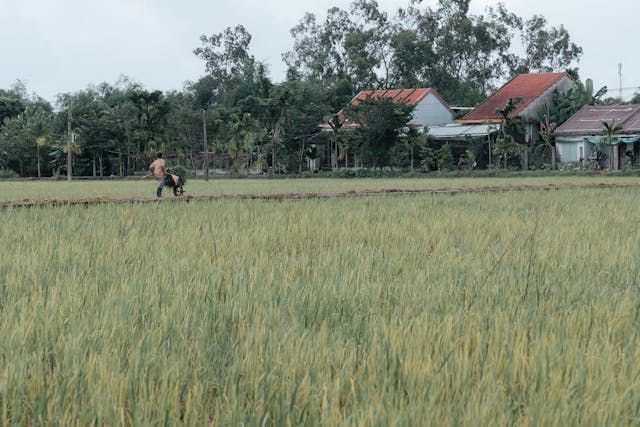
Originating in areas with abundant water, fertile land, and favourable climate, villages have been the foundation of civilizations. Civilizations evolved into towns, cities and modern cities due to population increases, technology, economic activity, and social requirements. Invaders and colonizers created cosmopolitan cities by providing entertainment, education, healthcare, and social opportunities.
Today, the choice that one may face is between living in a big city and living in a village or small town.
My own journey, having lived in a city, a small farming town, and holidaying in a village, has generated mixed feelings. Since my small farming town lacked higher education, I moved to a city. Following Sanatan Dharma, getting married and sustaining a family was challenging. Balancing the four basic goals of life – Dharma (moral living), Artha (prosperity), Kama (passion), and Moksha (liberation) – was difficult.
I could pursue Dharma anywhere, but aiming for prosperity meant moving to a city with more employment opportunities.
Economic and social opportunities come with significant challenges. Managing education and healthcare expenses within the family budget meant prioritizing these expenditures. After working in the city for nearly fourteen years, I realized that being there meant joining the rat race.
Living in a multiracial and multicultural environment meant everyone had their own passions. Some desired diverse foods, while others sought entertainment to satisfy their many needs. The glamour industry thrived, catering to many desires. In my youth and middle age, I enjoyed fulfilling my desires in cities. Many people from towns and villages visited cities for entertainment, making cities crucial even to country dwellers.
When my children entered tertiary education, we saw no future in the city. Thriving in the city required years of endurance, experience, and financial security – advantages which are often inherited. Unfortunately, I lacked the will to endure this because I had dreams. Also, as a Gujarati, I aspired for my family to become industrialists rather than employees.
Living in Bombay and Johannesburg had given me a good sense of the urban lifestyle; with age, however, I reconsidered continuing with city life. I had to decide whether to stay in the city or pursue my interests elsewhere.
As an engineer, I believed I could work anywhere. My education taught me that there are many solutions to a problem; if one does not work, try another, and with experience and ingenuity, one will succeed. I apply this approach socially, at work, and in facing engineering challenges.
Inspired by this mind-set, I established a plastic processing unit in my hometown, the first person to do so. Standerton, my birthplace, where my family had settled, is a commercial and agricultural town on the banks of the Vaal in Mpumalanga. Cattle, dairy, maize, and poultry farming are major agricultural activities in the area. Our industries benefit from excellent rail and road connectivity to other major economic hubs. But lately, with the new local government dispensation, many companies have closed due to deteriorating service delivery.
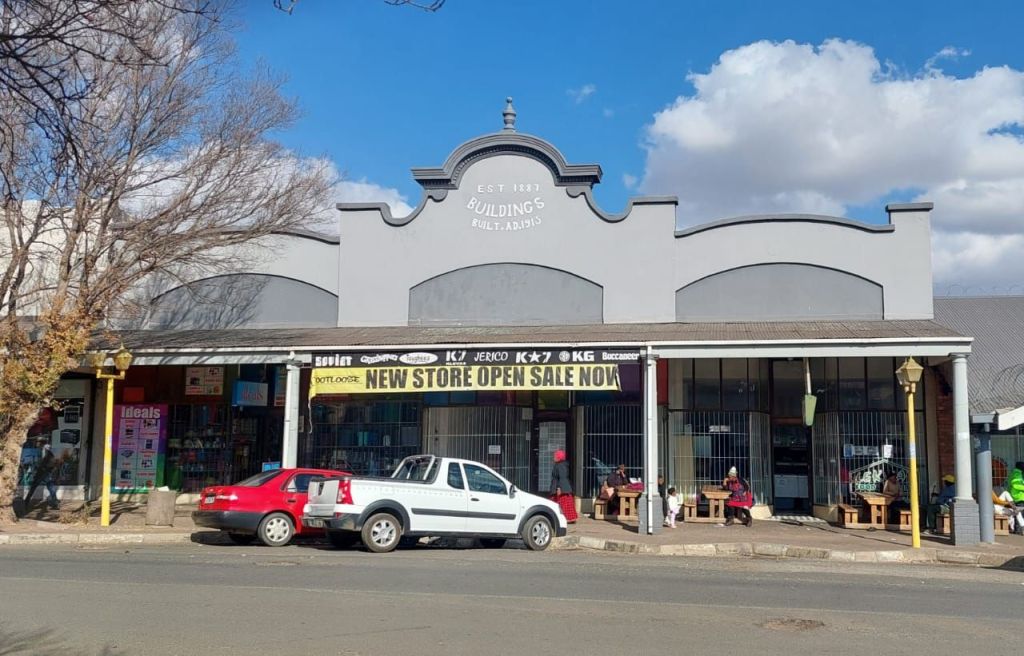
I embraced the challenge despite many disadvantages – limited skilled workers, fewer educational and healthcare facilities, lack of cultural and recreational activities, and limited public services and infrastructure. All along, the main challenge was to navigate the rules of Apartheid for non-whites. I see these years as a testament to my family’s perseverance, and my children now own and run the business.
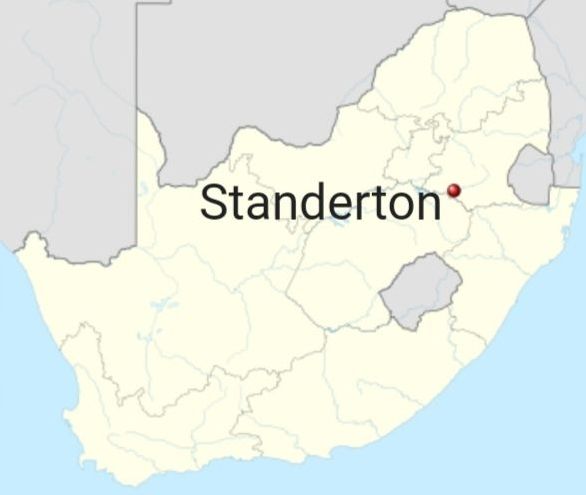
Thus I finally made the life-changing decision to settle down in Standerton, away from distractions. I wanted to buy a farm nearby and become a farmer, but that did not materialize. I have given everything to my children, and now aspire to live as a Sansari Yogi, striving to fulfil my ultimate goal of being a successful candidate for Moksha. To be honest, I would not like to run into a last moment hitch of the type that Yudhisthir ran into!
Part 2: by R. Srinivasan
Big city caught up with me again
I grew up in Bombay. Like they say, ‘born and brought up in Bombay’, from 1950, the year of my birth. I moved out of the city in 1974, when I went to Bangalore to pursue higher studies, vowing never to come back to live in Bombay.

One reason was that, over those years, Bombay began to grow from the core city of the British times, to a sprawling metropolis well beyond the core. I started feeling cramped both at home and outside. Living spaces in the city were small, due to the high cost of accommodation. Other living expenses were also high in the booming city. Most people who came in from smaller towns and cities had no other option but to somehow manage their lives in spite of everything.
At the same time, Bombay had a peculiar quality. Admittedly, everyone was used to living with people from different parts of the country, across different economic strata. At the same time, however, one noticed that there was a lot of divide among people along language, state, income and community lines. Generally one could identify a person’s background based on where he was living. In a time of calamity, without hesitation the people helped out all their fellow citizens; but otherwise people were just too busy to interact with others.
No doubt I had countless positive experiences as a youngster. But when I started making a living, post my stay at IITB, I felt like an alien in the city of my birth, childhood and youth. For a young adult, Bombay was the ‘go to’ place for a fast-track career. To me, however, it looked like a rat race, which was a big NO.
After post-graduation from IIM Bangalore in 1976, I had the choice of taking a job in Bombay or Delhi. I chose Delhi; soon thereafter, I got married. My wife is also from Bombay, and she had to uproot herself from her comforts of Bombay. In September 1977, I was posted by my company to Hyderabad. Thus, after a brief stint in Delhi, we moved to Hyderabad to start our life all over again.
I was familiar with Hyderabad from mid-1965 to 1970, as my sister and her husband used to live there, and I had visited the city a couple of times. At that time, ‘city’ was in fact a misnomer. Hyderabad was just a bicycle and cycle rickshaw town; covering a mere five km took you to the next village. In 1977, when I landed there again, it was no different. Of course one noticed some marginal changes; some cycle users had graduated to scooters or motorcycles, and some ‘autos’ could be seen competing with cycle rickshaws. In my inner self, I felt a sense of comfort there, while also recognizing that the laid back life of the city was not what I was used to.
In our initial years here, the city had a relatively small population, and people had a lot of physical connect. We met friends in each other’s homes, and rarely went to restaurants – because there were not many around, but also because we preferred the personal ambience of home. Life was simple, without the high pressure sense of urgency, as in Bombay, with the constant need to beat the clock.
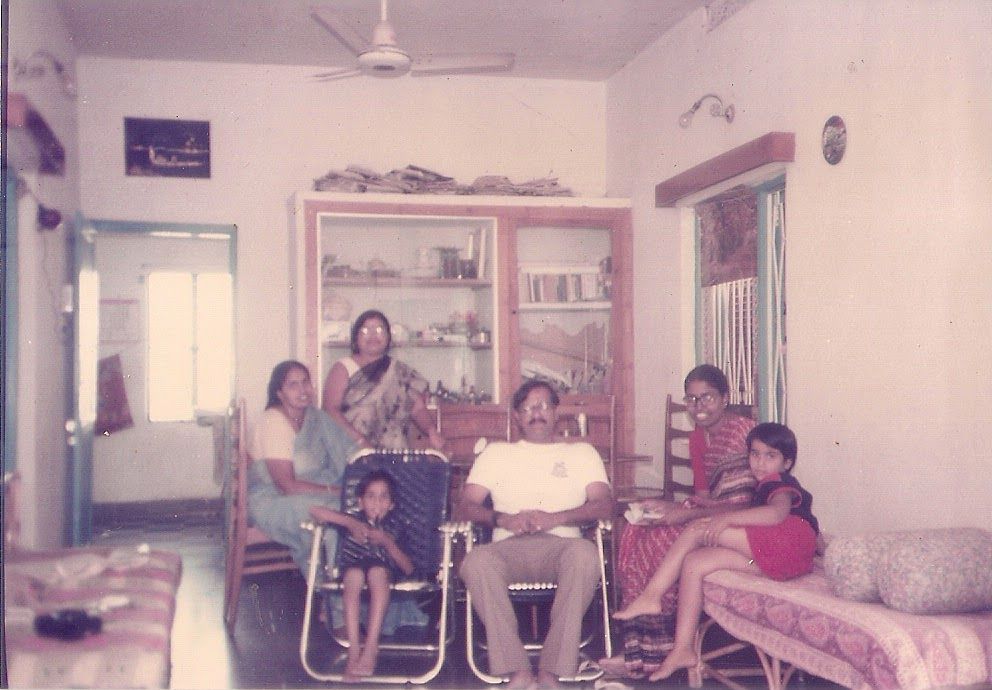
This was comforting in one way, but also disconcerting because slow changes could be sensed. Anyway, one just carried on because it was easy going. People knew each other well in the neighbourhood, and interacted freely. However, there was also a strict social and economic hierarchy, which I was too young to have noticed in Bombay. The well-off people lived in large independent homes with many servants. Even if you got to know them well, they judged you solely by your material possessions.
I got busy, at first with a job, and later with independent consulting practice. I began to notice that Hyderabad was also showing the characteristics of a rapidly growing city, especially from the early 1990s. Over the ensuing years, the city was deliberately transformed into a megacity by politicians and the builder lobby. Once it was a charming ‘one-horse’ town; today it is a megacity stretching far beyond its original borders. The outer ring road has a total length of 158 KM, and sometimes one has to drive over forty KM from end of the city to another.
As a result, people now spend more time commuting, and get caught in daily traffic jams on arterial routes. Like in Bombay, nowadays people do not meet each other at home, but only in restaurants – and that too if there is some business or professional interest. I started feeling like I was being taken by a time-machine back to my days in Bombay, where I had noticed similar patterns.
My parents came to Bombay around 1938, and finally moved out in 1990. Even after so many decades there, they had not felt rooted in Bombay; and they had no strong relationship with anyone in Bombay. In the next decade, they lived in Madras (now Chennai). My wife and I have the same feeling, as do many of my other family members. Now, as I am coming to the last stages of my life, after nearly 47 years in Hyderabad, I am also getting the same sense of alienation and rootlessness. I know many people in Hyderabad who had lived here in the early days and had never before felt this way. But today the old-timers who have lived here for generations are telling me they are also feeling lost in the megacity. It is a strange feeling, not recognizing the city in which one has grown up.
The question that comes to my mind is this: Why must we focus on growing a city solely for economic gain, when the human aspects of life get cruelly atrophied? The story of small towns growing into big cities are similar all over the world. The economic opportunities offered by big cities is the only reason people move there. Granted that a few people like me do escape the big city – but then they find that another big city catches up with them sooner or later!
Part 3: by Naresh Jotwani
Exploring the root causes
Full disclosure: For over ten years, I have been living in a farmhouse, on a small farm, in a village in North Gujarat. The idea was to live in peace and quiet, in the middle of greenery. I am glad to have made this choice, even though we did face many difficulties in the initial years. The write-up below is based on my own observations, and conversations with many people.
Economic factors
Economic factors play the decisive role in how human beings around the world organize their lives and activities. We see small, dispersed communities at one end, and huge, densely populated megacities at the other.
Imagine one square kilometre of area at some remote place in the country. With only primary production, perhaps that area can sustain a couple of hundred people. At the other end, in a bustling megacity, a hundred thousand people may live and work in a square kilometre. The ratio between these two numbers, 1:500, reflects – in purely monetary terms – the average ratio of productivities of persons in the two places; this ratio also explains migration from villages to cities.
Thriving hubs of economic activity create further opportunities and attract more people, and thereby the process feeds on itself. In sum, the size of an aggregate human habitat correlates very well with the size, variety and value addition of economic activity in that habitat.
The smallest human settlements are hamlets – loose clusters of huts in remote areas, with at most a couple of hundred inhabitants. Villages are bigger, and somewhat more organized, with typically a few thousand inhabitants. A small town is basically a village grown bigger in size and economic importance, often because it is situated on a transport hub. Next on that scale are cities, small and large, with typical populations of a few hundred thousand or more. The largest cities become sprawling, densely populated megacities, with populations of up to twenty million.
Economically, hamlets and villages depend largely on primary production – agriculture, animal husbandry, fishing et cetera. Small towns are centres of trading in agricultural products, simple industries and crafts, simple services such as tailoring, banks, schools, basic health services et cetera. Cities are bigger, with trading on a bigger scale, some industry, government services, tertiary education, better medical facilities, and so on. Finally, in megacities we find fast-paced economic and financial activities of all possible kinds. In cities and megacities, primary production is almost totally squeezed out by much higher value-added activities.
People living in cities and megacities face stiff competition, and must therefore specialize to a high degree. People in small towns tend to be capable of a number of different economic activities – agriculture, a trade such as plumbing or wiring, semi-skilled labour, small-time retail et cetera. Since agricultural work is seasonal, this seems to work out well for many people.

Effects on society
Where people live, and how they make their living, impacts on their family lives, social / community lives, professional lives and politics. In general, it seems that community ties are better preserved and respected in villages and small towns, whereas the drive for worldly success finds much more room to develop in cities and megacities. It should also be added here that a glittering, booming megacity offers an extremely difficult, even hazardous, life to the millions of required migrant workers who live in cramped conditions. ‘Out of sight, out of mind’ seems to be the formula applied to them.
Residents of a village or a small town, whether rich or poor, share a common view of their community life. In a big city, people simply cannot have a shared view. The reality of city life is too complex, and the population too huge and diverse, to permit a shared view. A common view of community life is a pre-condition of harmony. Therefore the ‘fractured reality’ of big city life is a crucial difference, as compared to the relatively tranquil village or small town life.
All said and done, every individual is at the centre of his life, and must reckon with whatever does or does not happen in the world around. According to traditional Indian wisdom, the four natural, psychological stages in an individual’s life are: studies (brahmacharya), family responsibility (gruhastha), withdrawal (vanaprastha) and renunciation (sanyasa).
In an earlier post (here), we have discussed in some depth these four natural stages in a typical individual’s life. Reading about Jayram’s and Srini’s experiences, we see how an individual’s world view changes over decades. Naturally, the world view influences how an individual chooses to live.
By way of comparison, we may here point out the so-called ‘modern western’ world view, that an individual must pursue material interests all along, until that is no longer possible. At that stage, the family and the society move that individual out of sight and out of mind, since they too have their own material interests to pursue.
Recent trends
Spread of information technology, financial services, show business et cetera tends to be centred in cities and megacities. However, the internet and smartphone services have also transformed rural areas in many ways. The government’s push on infrastructure will certainly contribute to better integration between the many nodes of economic activity.
Multinational software company ZOHO has taken a path-breaking step of locating their corporate R&D centre in a rural area of Tamil Nadu (see here). According to Sridhar Vembu, CEO and co-founder:
Today, it is possible for the daughter of a rural, landless worker to learn how electrical motors or Javascript frameworks work. There are talented local people in rural areas around the world to help, so that communities can work together, at home.
A combination of clear vision and economic strength can be a game changer, proving that so-called ‘conventional wisdom’ is much more convention than wisdom.
We trust the reader has found much food for thought in these points of view. We will be happy to hear from readers their own well-considered points of view, based on their own varied experiences in life. Shorter messages can be posted as comments, but we will also consider longer messages as possible posts on the blog.
Readers who appreciate this type of writing are requested to share this post with like-minded friends.
 seeker-of-root-causes
Urbanization has been closely coupled with economy and the only way transactions could happen was Mandi or Market place and hence aggregation was essential and then it got snowballed as more consumers meant more growth of market more opportunities so more people. The first time in history of mankind now we have network of internet and hence we have possibility of new paradigm of ubiquitous urbanization. Incidentally our senior IIT Bombay Alumni vasant gangavane ji has been promoting this idea and used to say that one panchayat area of about 100 to 125 sqkm is good size for intensive planned urban growth for better living , farm and non farm employment. He had created a plan for about 200 such cities in Ratnagiri and sindhudurg districts of Maharashtra state. I have been also trying to promote this idea on various platforms . Experts in urban research like prof Paolo Perulli from Italy has been working on patterns of urbanization and he included me in his research team which now focuses on Souths of the world which typically exist everywhere .
I chose Pune over Mumbai for same reason of living environment as explained by authors of blog in 1975 . Around 90 I could see that it was time to get out as Pune was going in same way as Bombay. So tried to establish in Goa and shift just when daughter was completing her SSC which could be good transition point. But noone in home supported the idea and finally I had to stop attempts for Goa establishment. I had tried to relocate once before to live on farm as per my friend Arun Deshpande of Lokvidnyan movement but found that I could not make a living there because did not have resources or skills for livelyhood to sustain in village . This was around 85 to 95 period . Arun continued to be there at his farm at Ankoli but dream of creating alternative urban pattern did not materialize . Vasant Gangavane ji left the world and his NGO and Aashram school which he ran in konkan also closed and his son migrated to Pune for job .
So though it looks as if most desirable lifestyle is new rurban where urban facilities are available in rural areas it still does not catch up with population based growth in demand and thus big cities keep growing all over the world .
Mobility and ease of migration has created new nomads who can go anywhere in world and make living but those are still a minority as always . Only people left out in villages are girls not married In urban households of old or totally uneducated and at rock in bottom of pyramid .
New rich who are investing in rural roadside shopping malls and resorts are changing the landscape along highways and with better roads in interior this pattern would go deeper . In some districts around Pune Mumbai area it is visible and many old villages on Pune sholapur road look like posh suburbs of Pune with nice roads bunglows and cars on road .
Excellent public schools are being established by private investors and hospitals will follow .
ubiquitous urbanization is certainly a future pattern .
Ashok Saraf +919890905752 on WhatsApp
LikeLiked by 1 person
Ashok your comments are valuable insights into how alternative individual efforts to decongest urban conglomerates are stymied by lack of societies participation whole heartedly. Long time back our former President Abdul Kalam proposed a concept called PURA, Providing Urban Amenities in Rural Areas. It had the support of a lot of intellectuals like Prof PV Indiresen former Director of IIT Delhi and others. But it never took off beyond lot of discussion in seminars. In western countries like USA and Europe they promoted the concept of suburbs to move people away from cities and still people had to commute to work in the cities. One economist even went to the extent of saying that cities with its vertical growth is the most economical model for urban living. All these ideas have focused on making money and as they say humans are only a resource to achieve that so their quality of existence is secondary. Today the tech environment may provide opportunities for decongesting cities but that will be for a small percentage of the population. Globally the past history of colonization has left a vast majority of people with out a means of sustainable life without moving to cities. And it will take a long time before this trend may reverse while the individual efforts to come up with alternative model of living which is a cross between city on one end and village on the other becomes economically practical.
LikeLiked by 1 person