
by Naresh Jotwani
Foreword:
Based on an earlier post on this blog (here), Keshav Vaze raised a very interesting question. His question prompted me to look for a rational answer, in the sense defined below. Some prior knowledge of Spinoza and of Vedant helped in formulating the answer, which I hope the reader will find to be of interest.
Keshav:
As an exercise in logic, can we arrive at Santana Dharma – that is, eternal law – through a point of view which is not anthropocentric?
Consider this excerpt from an earlier post:
A broadly accepted list of virtues in our tradition is this: generosity, morality, renunciation, wisdom, perseverance, forbearance, truthfulness, determination, love and equanimity.
According to Spinoza, these concepts of ethics are human-centric, but there is no basis for believing that God — or Nature or some law of Physics — created the universe with humans in mind. In Spinoza’s philosophy, humans are not considered inherently more important than any other part of nature.
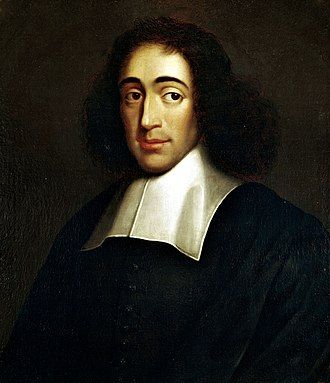
According to Spinoza, true ethical behaviour arises from understanding our place within this unified system and aligning our actions with the natural order. In this way, we can talk rationally about ecology, environmental protection, bio-diversity … et cetera.
Continue reading East meets west seeker-of-root-causes